What we do for a project in China
This is work the fund does for the projects it invests in, or for those it is raising capital for. China is where the valuation of a technology company changes, and none of it happens by correspondence — it is executed on the ground, in Chinese, by people who live there.

What the work consists of
Market analysis
Segment size, realistic price, who already holds the shelf, what the product must have to be admitted, and which channels actually sell it.
Market entry strategy
The entry model — export, joint venture, localised production, licensing — and the sequence, budget and timeline that follow from it.
State support measures
Subsidies, tax regimes, industrial-park and free-zone terms, and support programmes on both sides of the border, matched to your case.
Protection of intellectual property
Patents and trademarks registered in the PRC before the first negotiation, not after it, and a licensing structure where the model needs one.
Customer acquisition and advertising
Channels that work for the segment: marketplaces, WeChat and short video, trade exhibitions, and lead generation in Chinese.
Meetings with partners
Manufacturing partners, distributors, corporations and industrial parks — selected and verified, then a meeting we prepare and sit in.
Adaptation to the Chinese market
Product, packaging, certification, documentation and sales materials in Chinese, and the business practices the counterparty expects.
Who we do it for
The seven directions above are not a service catalogue. They are what the fund does to protect its own position: a company that has a manufacturing partner in Shandong, a distributor in Guangdong and a completed certification is a different asset from one holding a letter of intent. That is why this work goes to the projects we have money in, or whose round we are running.
- Projects the fund has invested in — the work is part of the investment.
- Projects the fund is preparing and taking to investors — the China scenario is what raises the round.
- Projects that have passed the committee and are entering the market with us.
What the fund actually has
- A partner network in Qingdao — the fund's key development hub in China.
- Standing work with the China Council for the Promotion of International Trade and the SCO Business Council.
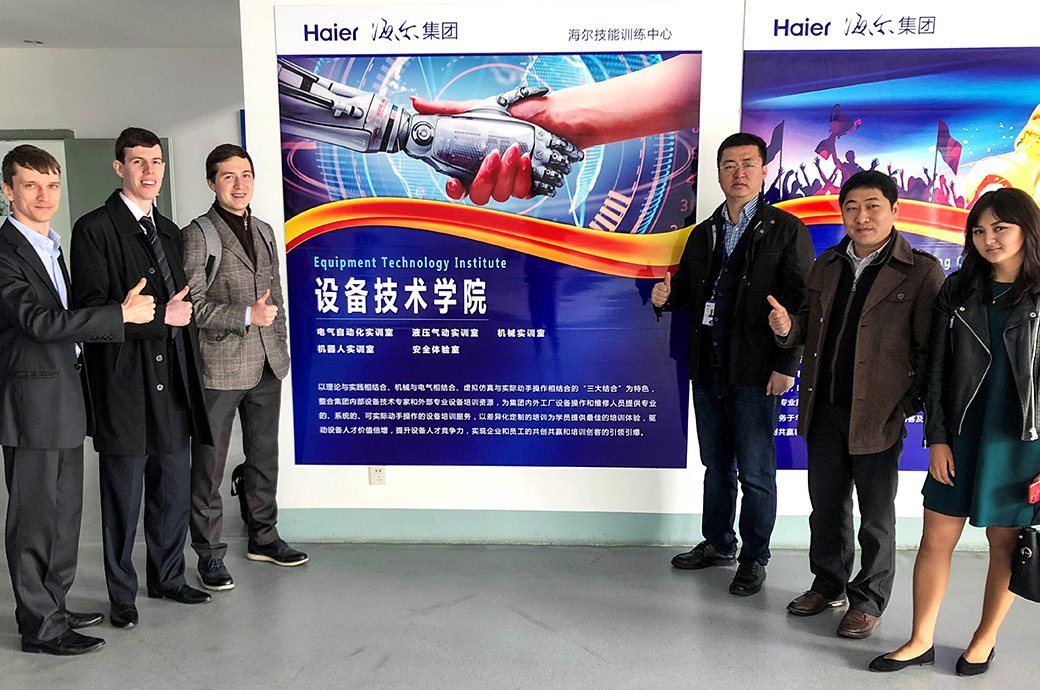
- Working relationships built at Haier, DongFeng Motors, Sieyuan Electric, TGOOD Electric and PNC.
- Residency and partnership in the Sino-German Ecopark in Qingdao and the China–Korea Business Incubator.
- In-house Russian–Chinese translation, so documents are not the bottleneck.
If you only need the consultation
Where the fund is not investing and not raising your round, the same team is available for a paid consultation on market entry into China — $500 per hour. That is an option rather than the main route: the fund is set up to invest in projects for an equity stake.
The fund may decline a request for paid services where it lacks the resources, or where it sees obvious doubts about the expediency of developing the project.